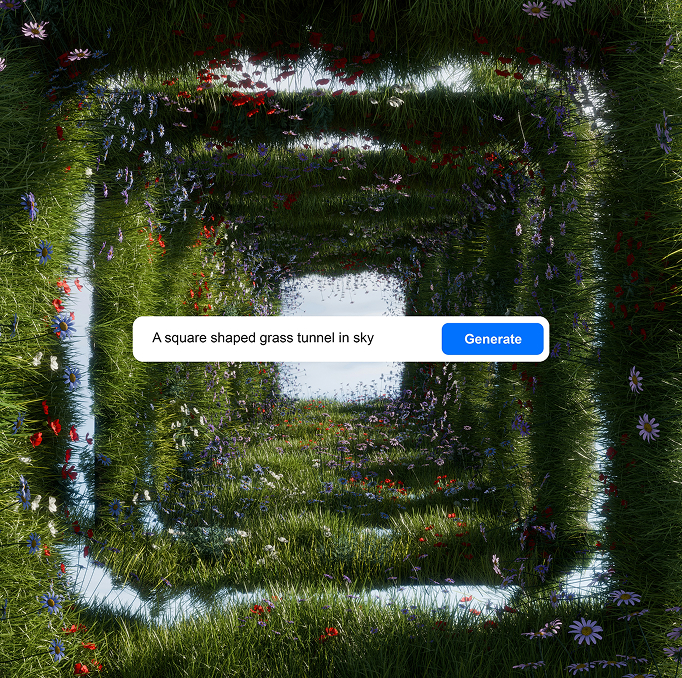
One quote that stuck with us: "A fool with a tool is still a fool." A bit brutal, maybe. But accurate. Because yes, the tools are becoming incredibly powerful. We immediately wanted to start experimenting with Figma Weave after seeing what's possible there – faster exploration, quicker iterations, less friction between idea and execution. But after playing around with it ourselves, the same thing became obvious pretty quickly: a tool can accelerate execution. It cannot replace vision. If you don't know what you're trying to create, what makes a concept strong, visually compelling, strategically right, or emotionally relevant, AI won't magically solve that for you. It will simply help you create the wrong thing faster.

AI was compared to a roll of film. You shoot a huge amount of material – maybe far more than you actually need. But the value isn't in the raw footage itself. The value comes from the human eye that selects, edits, sequences, and shapes that material into something meaningful. AI can generate endless options. But options are not ideas. Taste, judgement, storytelling, and creative direction still sit firmly with humans.

Some of the most interesting examples weren't about fully AI-generated campaigns – they were about hybrid workflows. One case showed how large agencies are combining traditional production with AI-assisted post-production in a way that actually makes sense. For a campaign for Lyft, they still used real photoshoots with real people, because authenticity in the human subjects matters deeply to the brand. But does a team really need to film Times Square for the 127th time just to get a background plate? Probably not. That's where AI becomes incredibly practical – not as a replacement for the core creative work, but as a smart production layer that removes repetitive, expensive, low-value tasks while preserving creative control and brand integrity.

Another recurring conversation was around billing. Because if AI makes parts of execution significantly faster, what happens to hourly billing? Speed alone has never been the true value of design. If a creative team can now test more concepts, visualize ideas faster, unlock more ambitious directions, or bring a campaign to life more efficiently, the client is often receiving more value – not less. Less time spent does not automatically mean less strategic or creative value delivered. It probably just means our pricing models need to evolve.

One talk that sparked mixed reactions came from Canva. The core argument was essentially: because everyone can design with Canva now, professional designers should embrace it too. And while we absolutely believe in being tool-agnostic, that take felt like it missed the audience entirely. The overlap between "Who here knows Canva?" and "Who here loves Canva?" was, let's say, very small. Because this conversation isn't really about which tool is used – it's about what it enables. Good design is never just software proficiency. It's taste, systems thinking, storytelling, restraint, strategy, context, and knowing when not to do something. Or, as the earlier quote put it: a fool with a tool is still a fool.
Democratized access to design tools isn't new. Templates exist. Drag-and-drop builders exist. AI prompting exists. That doesn't suddenly erase the difference between visual output and intentional design.
Our biggest takeaway? AI is absolutely becoming part of modern creative workflows – and that's not necessarily a bad thing. Research, ideation, coding support, mockups, iteration, production workflows, visual experimentation: there's enormous potential. But creatives are still in control. The interesting part now is figuring out how these workflows should actually look. Which tasks benefit from automation? Which ones should remain deeply human? Where does AI accelerate quality, and where does it flatten it? That's the exploration phase we're in right now. And honestly, that feels exciting.